contact@swiminternational.com.au

10 Health Benefits of Swimming: Revitalise Your Body, Mind, and Spirit

10 Health Benefits of Swimming: Revitalise Your Body, Mind, and Spirit

Swimming is a versatile and enjoyable form of exercise with a wide range of benefits for your overall health and well-being.
Not only does it provide a full-body workout, it also offers a refreshing experience for your body, mind, and spirit.

Dive in to explore the many benefits of swimming!

1.  Full-Body Workout

Swimming engages almost all major muscle groups in your body. This provides a complete workout for your arms, legs, core, back, and shoulders. It’s a low-impact exercise, meaning it doesn’t put stress on your joints, making it ideal for people of all ages and fitness levels.

2.  Cardiovascular Health

Swimming is an excellent aerobic exercise. It gets your heart pumping, your blood flowing, your breathe deep, and therefore improves cardiovascular fitness. In fact, regular swimming can help lower your risk of heart disease, improve circulation, and increase your lung capacity, which is excellent for asthma suffers and sports people alike.

3.  Weight Management

Swimming is an effective way to burn calories and manage your weight. It can help you lose weight or maintain a healthy weight, as it is a high-energy activity that burns a significant number of calories without putting stress on your joints. The act of swimming uses many muscle groups and stretches the body, activities great to assist with weight management and fitness.

4.  Mental Well-being

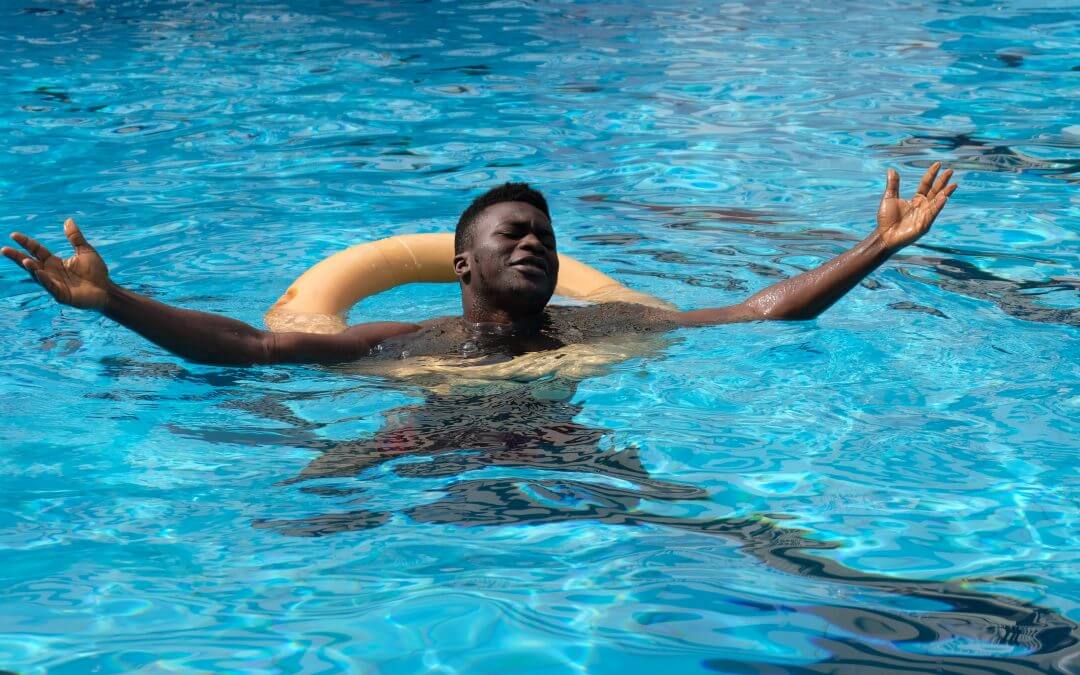
Swimming can have a positive impact on your mental health. For example, swimming with repetitive and rhythmic movements can help reduce stress, anxiety, and depression. Additionally, the calming effect of being in the water and the release of endorphins can improve your mood and boost your overall well-being. The ability to relax and float in the water, letting it hold you, is a deeply relaxing and meditative experience.

5.  Flexibility and Balance

Swimming requires a wide range of movements, using both sides of your body, and can improve your flexibility and range of motion. It also challenges your balance and coordination as you move through the water, which helps to improve your overall body control and stability.

6.  Low-impact Exercise

Swimming is a low-impact exercise that is gentle on your joints. Therefore it is an ideal option for people with joint pain or conditions such as arthritis. It provides a safe and effective way to stay active and fit without putting stress on your joints.

7.  Rehabilitation and Injury Recovery

Swimming is often used as a form of rehabilitation for people recovering from injuries or surgeries. The buoyancy of water reduces the impact on injured joints or muscles, allowing for gentle and effective exercise to aid in the healing process.

8.  Improved Sleep

Regular swimming can improve the quality of your sleep. It helps to reduce stress, anxiety, and tension, therefore promoting a more restful night’s sleep and helping you wake up feeling refreshed and rejuvenated.

9.  Social Interaction

Swimming can be a social activity that allows you to connect with others, whether it’s through swimming lessons, aqua aerobics classes, or simply swimming with friends or family. Social interaction can have a positive impact on your mental well-being, providing opportunities for bonding, relaxation, and fun.

10.  Joy and Relaxation

Swimming is a form of recreation that can bring joy, relaxation, and a sense of freedom. For example, the sensation of gliding through the water, the weightlessness of being held up by the water, and the natural relaxation response triggered by being in the water can help reduce stress, promote relaxation, and rejuvenate your spirit.

As you can see, swimming offers a wide range of health benefits for your body, mind, and spirit. The magic of water, the freedom to float or glide. The ability to use the water as resistance for exercise and swimming strokes. It provides a full, balanced and healthy full-body workout. Swimming improves cardiovascular health, promotes mental well-being, and social interaction. A versatile sport and fun activity that can revitalize your overall well-being inside and out. So, put on your swimsuit, dive into the water, and experience the many benefits of swimming for yourself.

Happy Swimming!
 

The Art of Swimming: A Dive into the History and Techniques of Different Swimming Strokes

The Art of Swimming: A Dive into the History and Techniques of Different Swimming Strokes

Swimming is not only a popular recreational activity, but also a competitive sport that requires skill, technique and practice.

One of the key aspects of swimming is the variety of strokes that swimmers use to move through the water efficiently. In this blog post, we will delve into the history and techniques of different swimming strokes, from the traditional breaststroke to the modern butterfly stroke.

  • Breaststroke: A Stroke Steeped in Tradition

The breaststroke is one of the oldest known swimming strokes, with evidence of its existence dating back to ancient Egypt and Greece. It is often considered the most traditional and graceful of all the swimming strokes. In the breaststroke, swimmers lie face down in the water, bring their arms in front of their body, then pull them back towards their chest while lifting their head to take a breath. The legs perform a simultaneous kick called the “frog kick,” where the feet are brought towards the glutes and then extended outwards.

  • Backstroke: Embracing the Element of Backwards

As the name suggests, the backstroke is performed on the back, with the swimmer’s face facing upwards. It is believed to have originated in the early 20th century and was first introduced as a competitive stroke in 1900. In the backstroke, swimmers use a combination of arm movements and leg kicks to propel themselves through the water. The arms move in a continuous motion, alternating overhead, while the legs perform a flutter kick.

  • Freestyle: The Versatile and Popular Stroke

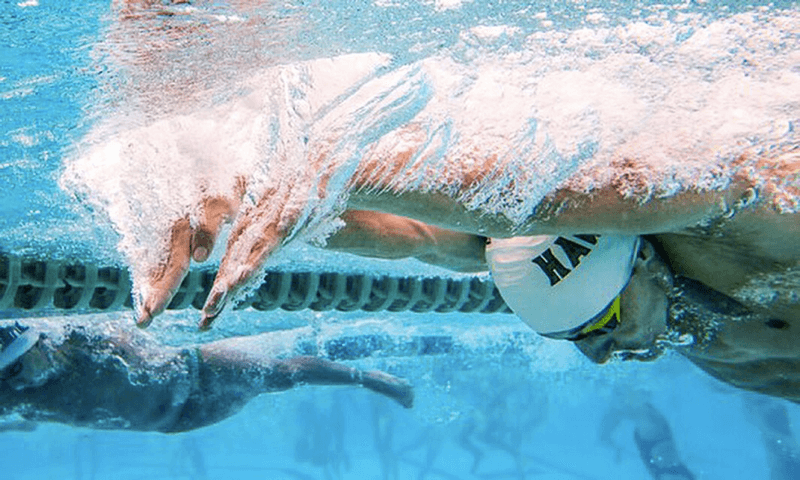
The freestyle, also known as front crawl, is the most used stroke in competitive swimming and is often synonymous with the term “swimming.” It allows swimmers to move quickly and efficiently through the water with a combination of arm strokes and leg kicks. The arm movements in freestyle involve an alternating overhead motion, while the legs perform a flutter kick. Swimmers can also use various breathing techniques, such as bilateral breathing (breathing on both sides) or unilateral breathing (breathing on one side), to maintain their pace and endurance.

  • Butterfly: The Dynamic and Challenging Stroke

The butterfly stroke, often referred to as “fly,” is known for its unique and challenging technique. It was first introduced as a separate stroke in competitive swimming in the 1930s and has since become a staple in the sport. In the butterfly stroke, swimmers perform a simultaneous arm pull with both arms, accompanied by a dolphin kick, where both legs move in an undulating motion like a dolphin’s tail. The butterfly requires a great deal of upper body strength and coordination, making it one of the most physically demanding strokes.

  • Sidestroke: A Stroke of Efficiency

The sidestroke is a less commonly used stroke in competitive swimming but is often favoured for its efficiency in open water swimming and lifesaving situations. In the sidestroke, swimmers lie on their side and perform a scissor kick with one leg while pulling with the opposite arm. The other arm remains extended along the body for stability. The sidestroke allows swimmers to conserve energy and maintain a steady pace, making it a practical choice for long-distance swimming or rescue missions.

swimming strokes have a rich history and varied techniques that have evolved over time. From the traditional breaststroke to the modern butterfly stroke, each stroke offers unique challenges and advantages. Whether you’re a recreational swimmer or a competitive athlete, mastering different swimming strokes can improve your efficiency, speed, and overall performance in the water. So, dive in, explore the art of swimming, and discover the joy of gliding through the water with grace and skill!

Top 7 Reasons to Do a Swimming Teacher and Coaching Course

Top 7 Reasons to Do a Swimming Teacher and Coaching Course

If you want a job you love, or even your own business, where you get to meet people, share a skill that everyone needs and is fun, while earning money and gaining invaluable experience, consider becoming a swimming and water safety teacher and give swimming lessons to people of all ages.

If you need some convincing, here are the top 7 reasons why you should consider becoming a teacher of swimming and water safety skills whether at home or abroad.

1.  You do not have to be a fantastic swimmer to be a swimming teacher or coach!

If you think you are not a good enough swimmer to be a swimming teacher, think again!  Swimming teaching covers all levels of swimming ability, from beginners to advanced strokes, babies and toddlers, to fearful adults and more. You can focus and specialise in an area of your choice, and upskill to gain more qualifications when you are ready. Teaching swimming is first and foremost about safety in and around water. If you have basic swimming skills, confidence to be in a swimming pool, and love to share knowledge and skills, then you could become a swimming teacher. As you learn you will find your own swimming skills and confidence improves. Additionally, if you lack confidence or experience as a teacher, that is our forte. We have a special style and formula to make swimming teaching easy! Follow the formula and you will be able to see results very quickly. 

2.  You do not need a degree to be a teacher of swimming and water safety!

Compare being a swimming teacher with other teaching jobs where you usually need a lot of education, often a degree, to get a job. However, with swimming teaching you do not. You do need specialised training, learning theory of swimming and water safety, as well as developing teaching skills and lesson plans. You do not have to spend years at university to get a great new career that can open a whole new world and freedom to be in control of your time and life while sharing an essential life skill that saves lives. Swimming teachers are in demand. Good swimming teachers are booked out! 

3.  Swimming Teachers are in demand no matter where you are!

Swimming teachers are in demand across the world, so you should be able to find work no matter where you are. For example, you may work in your home country, or choose to explore the world. You can be a freelancer, employed by a private college that has swimming lessons, or a private swimming school. No matter what level of student you choose to teach, for example babies, children, adults, from learn to swim to triathletes, you can specialise or generalise!  It’s up to you. The first step is to take a swimming teaching course to guide you through the theory, helping you get that important practical experience, and giving you all the tools, knowledge, lesson plans and support that you need to conduct great classes. Our training courses will guide you through and help you long after you have completed your studies.

4.  Age is no barrier to becoming a Swimming Teacher!

Age is certainly no barrier to becoming a swimming teacher. Mature students are most welcome. Perhaps you are in a career transition, or you are already well experienced at working and looking for a career change, even a retirement business in the sun. Perhaps you are at the other end of your career – just starting work, or a university student, on a gap year, and needing some extra cash. If you are 17 years and over, you can become a swimming teacher. Are you a parent needing extra work? Swimming teaching is a very popular course for you too. In fact, your experience in the work force and as a parent will have equipped you with transferable skills to help you be a great swimming and water safety teacher in a very rewarding job.

5.  Language is no barrier!

Language is no barrier to learning to swim or teaching people to swim. Having worked internationally with many different cultures, we can teach you to communicate without needing to speak the same language. We use demonstrations, repetition, and key words that enables you to easily teach people of other languages and levels of understanding. Conducting swimming lessons brings cultures together and bridges language barriers. Swimming and a love for water is enjoyed by all. Water safety lessons and swimming lessons are needed by everyone.

6.  A new career, start your own business or a side hustle!

Teaching swimming can be a side hustle, earning you additional income and not interfering with your regular job or studies. Many learn to swim classes are conducted before and after school hours, as well as on the weekends.  Are you a TEFL teacher?  A swimming teaching certification is a great additional qualification to make you even more employable. Swimming teachers are needed all year around. Even if you don’t intend to make swimming teaching a full time career, working as a teacher will improve communication, leadership and organisational skills, and that looks great on any CV.  As a qualified and experienced freelance swimming teacher working for yourself, you can decide how much you want to charge and be paid, whether you conduct private one on one lessons, or group classes.

Our swimming teacher training will mean you are employable no matter where you go, in your home country or overseas. Through our training and support you will have gained valuable knowledge, experience and qualifications that are in demand.

7.  You will make a Difference to the Lives of the People You Teach!

Swimming is a skill for life. It saves lives and brings happiness and joy to children and adults alike. It is great for your health and fitness, body, mind and spirit, and is a skill that you can use well into old age. Teaching swimming and water safety means that your students have a skill that they can share and encourage in others.

Everyone remembers their swimming teacher and their first experiences at swimming. Your swimming lessons may save someone’s life. They will certainly bring a love of water and swimming to those you meet and help. This is one job that brings a smile to your face, and satisfaction to your heart and mind, knowing that you make a difference in people’s lives for generations to come. You never know, you may be teaching a child who ends up being a future Olympic champion!

Happy Swimming!